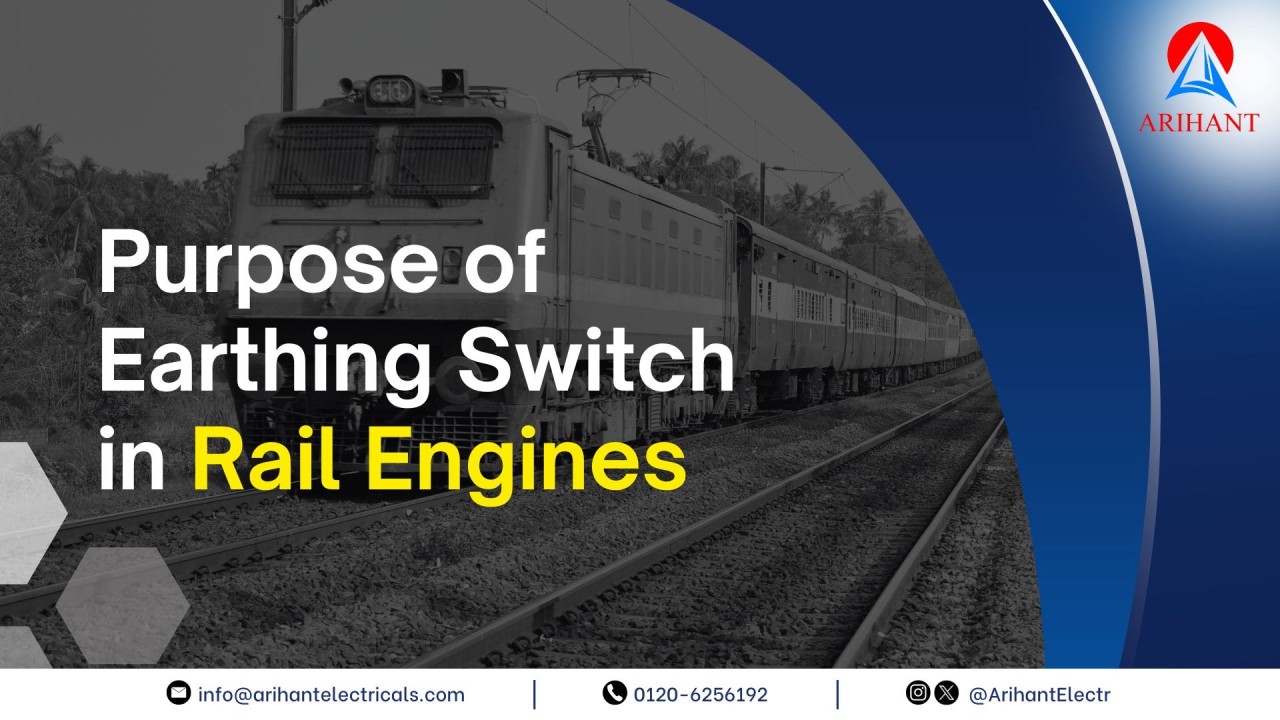
In modern electric locomotives, safety is one of the most critical aspects of railway operations. Among the various protective components used in high-voltage systems, the Earthing Switch plays a vital role in ensuring the safety of both maintenance personnel and railway equipment.
An earthing switch is designed to connect high-voltage equipment directly to earth (ground), making the system safe for inspection, maintenance, and servicing activities. It helps eliminate any residual or induced electrical charge that may remain in the system even after power is disconnected.
Main Purpose of an Earthing Switch
The earthing switch is mainly used to:
- Discharge residual electrical charge from equipment.
- Protect maintenance staff from electric shock.
- Prevent accidental energization of high-voltage circuits.
- Protect railway equipment during fault conditions.
- Ensure a safe working environment during maintenance procedures.
Where It Is Used in Rail Engines
In electric locomotives, earthing switches are generally installed inside the high-voltage compartment and connected to major HV equipment such as:
- Pantograph line
- Main transformer input
- Roof-mounted high-voltage equipment
- Circuit breaker section
The earthing switch is operated only after the pantograph is lowered and the main circuit breaker is opened, ensuring complete isolation from the overhead traction supply.
Working Principle of the Earthing Switch
The operation of the earthing switch follows a systematic safety procedure:
- The locomotive is disconnected from the overhead traction line.
- The pantograph is lowered.
- The main circuit breaker (MCB/VCB) is opened.
- The earthing switch is closed, connecting the high-voltage line to the locomotive body (earth).
- Any stored or induced voltage is safely discharged to ground.
This process ensures that no dangerous voltage remains in the system before maintenance work begins.
Types of Earthing Switches Used
Different types of earthing switches are used in railway high-voltage systems depending on operational requirements:
1. Manual Earthing Switch
- Operated manually using a handle.
- Commonly used during maintenance activities.
2. Motorized Earthing Switch
- Electrically operated.
- Widely used in modern locomotives and substations.
3. High-Speed Earthing Switch
- Used for fault protection and rapid discharge of transient voltages.
- Provides enhanced system protection in advanced traction systems.
Typical Technical Ratings
The technical specifications may vary depending on the railway application. Typical values used in railway traction systems include:
- Voltage Rating: 25 kV AC
- Short-Time Current Capacity: 25–40 kA for 1–3 seconds
- Frequency: 50 Hz
- Operation Type: Manual or Motorized
These ratings ensure reliable performance under demanding railway operating conditions.
Safety Advantages of Earthing Switches
The earthing switch offers several important safety benefits:
- Protects maintenance personnel from electrical hazards.
- Ensures zero-voltage condition before inspection.
- Reduces risks caused by induced voltage from overhead lines.
- Enhances the overall reliability and safety of the traction system.
- Minimizes the possibility of equipment damage during maintenance.
Application in the Indian Railway System
In the 25 kV AC traction system used by Indian Railways, earthing switches are extensively used in:
- Electric locomotives
- Traction substations
- Sectioning Posts (SP)
- Sub-Sectioning Posts (SSP)
They are an essential part of railway safety procedures and are always used before carrying out maintenance on overhead equipment or locomotive high-voltage circuits.
Conclusion
The earthing switch is a crucial safety component in railway traction systems. By safely grounding high-voltage equipment, it protects both personnel and critical locomotive systems from electrical hazards. With advanced interlocking systems and reliable operating mechanisms, earthing switches continue to play a key role in ensuring safe and efficient railway operations across modern electric locomotives and traction infrastructure.