
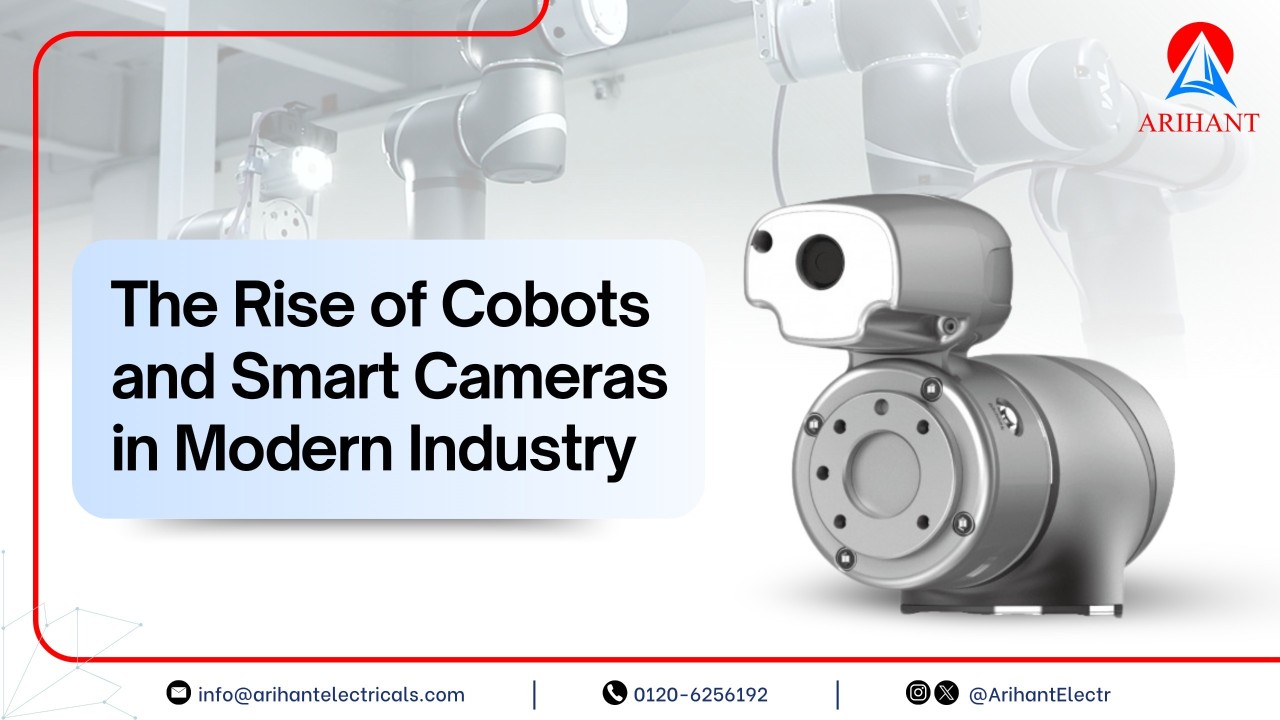
Introduction
Automation is no longer a future concept, it’s a present-day competitive advantage. Across industries, businesses are embracing collaborative robots (cobots) and smart cameras to drive smarter, safer, and more efficient operations.
Unlike traditional automation systems that operate in isolation, today’s solutions are built for human-machine collaboration. When cobots are combined with intelligent vision systems, they unlock a new era of adaptive, data-driven manufacturing and operations.
What Are Cobots?
Collaborative robots, or cobots, are designed to work with humans—not replace them. Built with advanced sensors and intuitive controls, they can safely share workspaces and assist in repetitive or precision-driven tasks.
Key Features
- Safety-first architecture with real-time collision detection
- User-friendly programming (often no coding required)
- Flexible deployment across multiple applications
- Compact, scalable, and cost-efficient
Applications
- Assembly line support
- Packaging and palletizing
- Machine tending
- Quality inspection
Cobots are particularly valuable for SMEs, offering low entry barriers and quick ROI without heavy infrastructure investment.

What Are Smart Cameras?
Smart cameras are advanced vision systems that not only capture images but also process and analyze them in real time, without relying on external computing systems.
Key Features
- Integrated image processing
- Real-time analytics and decision-making
- AI and machine learning capabilities
- Compact, standalone design
Applications
- Defect detection and quality assurance
- Barcode and QR code scanning
- Object recognition and tracking
- Precision measurement and alignment
The Power of Integration
When cobots and smart cameras work together, they create intelligent automation ecosystems capable of adapting to dynamic environments.
Key Benefits
1. Vision-Guided Automation
- Detect objects regardless of orientation
- Dynamically adjust robotic movement
- Enable complex sorting and handling
2. Enhanced Quality Control
- Real-time inspection minimizes defects
- Reduces rework and operational waste
3. Greater Flexibility
- Rapid reconfiguration of production lines
- Seamless handling of product variations
4. Improved Workplace Safety
- Continuous monitoring of human presence
- Reduced risk of accidents
Industry Use Cases
- Manufacturing: Precision assembly and automated inspection
- Logistics: Intelligent picking, sorting, and warehouse automation
- Healthcare: Lab automation and diagnostic accuracy
- Agriculture: Crop detection and selective harvesting
Challenges to Consider
While the benefits are compelling, organizations should plan for:
- Initial investment costs
- Integration complexity with legacy systems
- Workforce training and upskilling
- Environmental factors impacting vision accuracy
Future Trends
The future of automation lies in intelligent collaboration. Key trends include:
- Increased adoption of AI and deep learning
- More intuitive human-robot interaction (HRI)
- Expansion into non-industrial sectors
- Declining costs making solutions more accessible
Conclusion
The convergence of cobots and smart cameras is transforming how industries operate. By blending human intelligence, robotic precision, and machine vision, businesses can achieve:
✔ Higher productivity ✔ Superior quality control ✔ Safer working environments
As adoption accelerates, organizations that embrace this shift early will gain a significant competitive edge.